

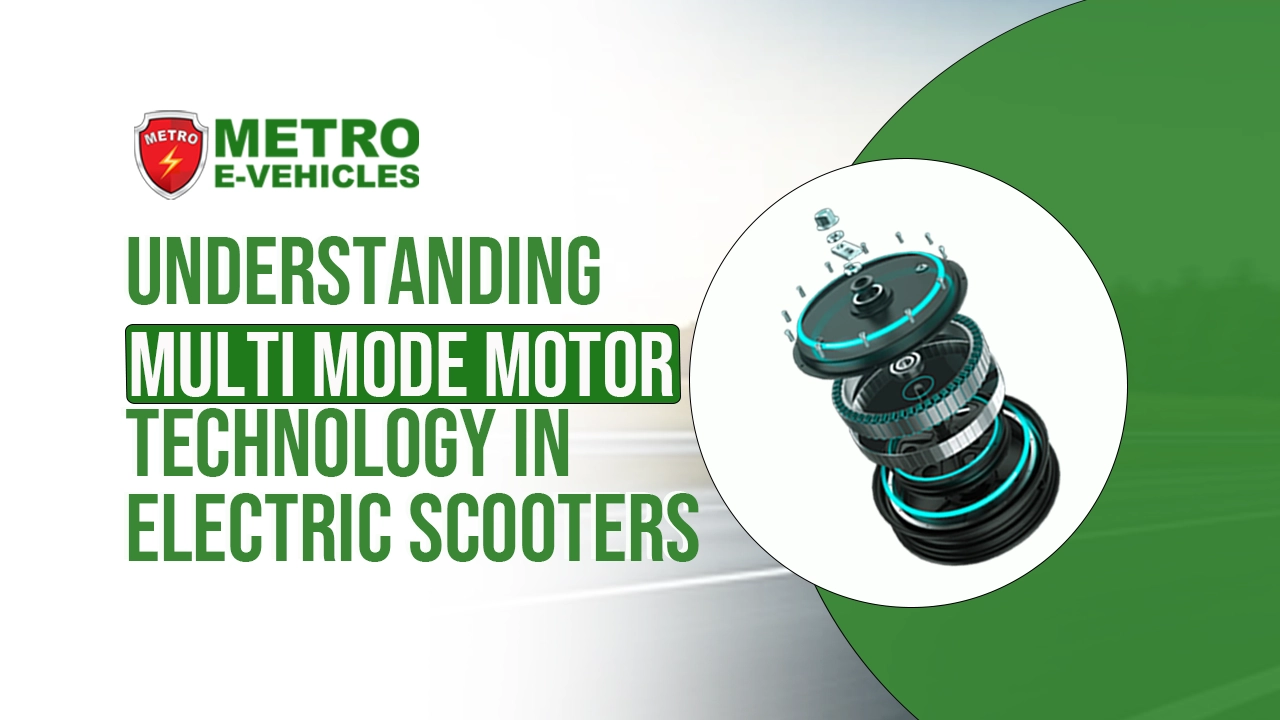
Multi-mode motors are quietly transforming how we ride, giving riders precise control over speed, power, and range all from the handlebars. Here’s everything you need to know.
What is a Multi-Mode Motor?
A multi-mode motor is an electric drive system capable of operating across several distinct performance profiles, each optimised for a different riding condition. Unlike a conventional single-output motor that delivers one fixed power curve, a multi-mode motor uses intelligent firmware and power electronics to dynamically adjust torque delivery, RPM limits, and regenerative braking intensity.
In practical terms, this means your electric scooter can behave like a conservative commuter in Eco mode and transform into a responsive urban sprinter in Sport mode — using the same motor hardware, simply reconfigured through software.
The motor itself is typically a Brushless DC (BLDC) or Permanent Magnet Synchronous Motor (PMSM), paired with a smart controller (ESC) that reads rider inputs and environmental conditions in real time. The “modes” are pre-programmed control strategies stored in the controller’s firmware, activated via a dashboard toggle or mobile app.
How Multi-Mode Improves Efficiency & Performance
The efficiency gains from multi-mode operation are significant and measurable. When a motor runs at partial load (Eco or City mode), it operates closer to its peak efficiency band on the torque–speed curve. Pushing a motor to its limits continuously — as in permanent Sport mode — generates excess heat, increases winding stress, and consumes far more energy per kilometre.
Regenerative braking deserves special mention. By capturing kinetic energy during deceleration and feeding it back into the battery management system, modern scooters can reclaim 10–15% of total energy expenditure in city riding — effectively extending range without adding a single watt-hour of battery capacity.
On the performance side, Sport mode’s full FOC control allows the motor to deliver maximum torque from 0 RPM — giving riders a responsive, car-like pull from a standing start that older scooters simply cannot replicate.
Benefits for City and Long-Distance Riders
Whether you’re weaving through Lahore’s inner-city traffic or cruising on a longer intercity stretch, multi-mode technology adapts to your journey — not the other way around.
Urban commuters: City mode delivers crisp, predictable acceleration in dense traffic without the anxiety of accidentally triggering full-power surges. Regen braking reduces wear on mechanical brakes and gives riders single-lever deceleration on crowded roads.
Long-distance riders: Starting in Eco and switching to City for overtaking allows riders to actively manage their state of charge — arriving at their destination with a predictable reserve rather than anxiously watching a depleting battery gauge.
Hilly terrain: Uphill stretches benefit from Sport mode’s full torque, while downhill runs in Regen mode recover that energy — making hilly routes far more efficient than flat-only calculations suggest.
New riders: Eco mode acts as a natural governor, limiting top speed and softening throttle response — creating a far safer learning environment without the need for a separate restricted-power vehicle.
Motor longevity: Habitual Eco and City mode use keeps operating temperatures lower, which directly correlates to longer winding insulation life and extended motor lifespan — a significant factor when calculating your scooter’s total cost of ownership.
Why This Feature Matters in Modern EVs
The electric vehicle market is maturing rapidly. As battery costs plateau, the differentiating factor between an average scooter and an outstanding one increasingly comes down to software intelligence — and multi-mode motor control is at the heart of that intelligence.
Range anxiety remains one of the biggest barriers to EV adoption in Pakistan. Multi-mode systems directly address this by giving riders tangible control over their consumption. When you know you can switch to Eco and add 20–30 km of range on the fly, range anxiety loses much of its grip.
From a regulatory standpoint, many city authorities are beginning to introduce speed zoning for micromobility — requiring different speed limits in pedestrian areas versus main roads. Multi-mode geofencing (already seen in premium models) automatically adjusts the active mode based on GPS location, keeping riders compliant without manual intervention.
As Pakistan’s EV ecosystem continues to grow — from expanded charging infrastructure to stronger after-sales networks — features like multi-mode motor control will shift from a premium differentiator to a baseline expectation. Buying an EV without it today is a bit like buying a smartphone without adaptive brightness.